Let’s Talk About the Bus Factor (and Why You Don’t Want to Be the Only One on Board)
Every support team has that one rockstar. You know the one. They can answer any question, fix any problem, and somehow have the whole playbook memorized. But what happens when they go on vacation? Or, even scarier, decide to quit?
If all that know-how is stuck in just one or two people’s heads, you’re in trouble. Suddenly, you’ve got single points of failure, promotions get stuck, and everything just takes longer when your go-to person isn’t around.
If you want to make your team bulletproof, you can’t just keep cheering for the lone hero. You need to turn those heroes into teachers and help everyone level up.
The Bus Factor
The Bus Factor is defined as:
The minimum number of key people who would need to suddenly leave the organization (e.g., get hit by a bus, win the lottery, or resign) for a specific project, process, or system to immediately stall or fail.
Yeah, it’s a little morbid. But seriously, are you ready for your rockstar to catch the bus?
Mapping the Danger Zones (Where Are the Single Passengers?)
So, if you want to be ready for anyone on your team to catch their bus, start simple. Make a spreadsheet with all your critical systems, workflows, tools—anything important.
For each thing on your list, figure out how many people actually know how it works or can use it. Then, highlight each one using this system:
🟢 4+ People
🟡 2 – 3 People
🔴 0 – 1 Person
This map is basically your team’s GPS. It shows you exactly where you need to build new knowledge-sharing routes.
The goal here is to move from Red to Yellow or Green, then, once all your Reds are addressed, move all Yellows to Greens. Prevent knowledge silos by implementing systems that encourage team-wide sharing of expertise.
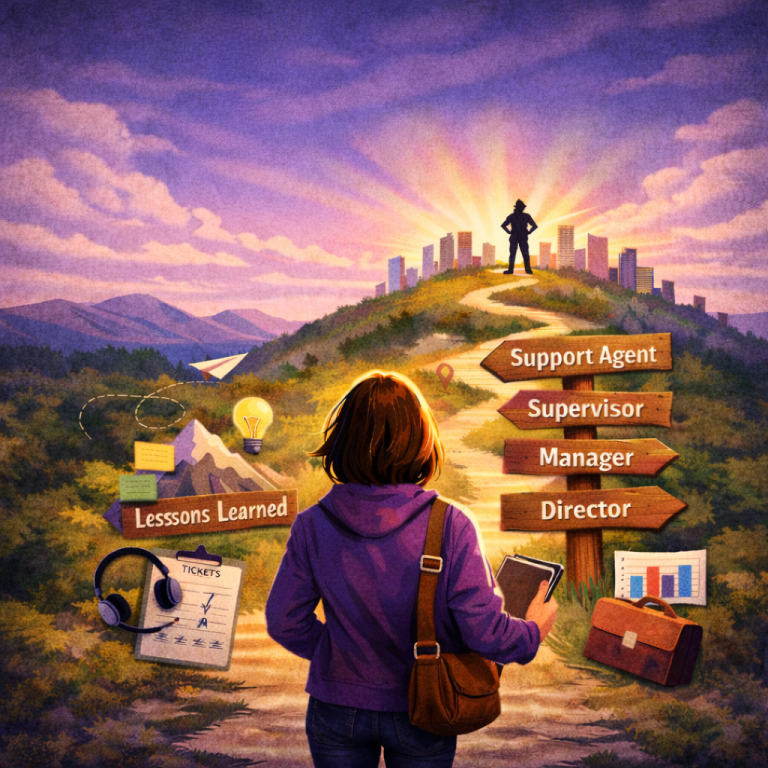
Phase 1: Building New Routes (The Two-Ticket Mandate).
Two Tickets Required for Travel
To eliminate human SPOFs, every agent must earn these two tickets:
- Documentation is a KPI
- Mentorship is a Requirement for Promotion
The KPI is simple: Every new fix must generate a new or updated KB article.
Everything has to be written down. Seriously, it doesn’t matter if it’s just a tiny fix or a huge breakthrough; every new process, workaround, fix, or tip should be shared with the team. That means step-by-step instructions, screenshots, links, and any lessons learned. Make it easy to find, keep it up to date, and write it so even someone on their first day gets it. If you find a shortcut or finally fix that weird issue that’s been driving you nuts, add it to the KB immediately.
If it’s not documented, it might as well not exist.
Here’s the thing: if you want to move up, you’ve got to show you can actually help others level up, too. That’s why mentorship should be a requirement for promotion. It’s not just about being good at your job or knowing all the answers—it’s about making sure you’re bringing the rest of the team along for the ride. If you’re teaching, coaching, and sharing what you know, you’re helping the whole crew get better (and not just hoarding all the secrets for yourself).
Also, mentoring builds trust and makes the team way less dependent on any single person. It’s a great way to spot and grow future leaders, and it means you’re not leaving the company in the lurch if you move up (or move on). Leadership isn’t just checking boxes or hitting targets—it’s about making the people around you stronger. If you’re ready for a promotion, you should have proof you’ve done that.
The Buddy System
The best way to use your support heroes? Have them teach the rest of the team. That’s where the Buddy System comes in. Or, if you prefer, call it Driver and Co-Pilot. Either way, it’s about making sure no one is driving solo.
Pick one of your Red Light items and pair up the only person who knows it with a co-pilot. The expert (your Driver) is now in charge of teaching their buddy and making sure they actually get it—no just nodding along allowed.
The Driver’s performance score on ‘Team Development’ is 100% dependent on the Co-Pilot’s performance review for that certified process. If you’re going to be the expert, you’ve got to pass the torch, not just hold onto it.
The Hand-Off Certification (The Driver’s Test)
- The Co-Pilot executes the process successfully unsupervised.
- The Co-Pilot creates a complete, approved Standard Operating Procedure (SOP) in the Knowledge Base.
- The Driver (Mentor) officially signs off on the new SOP, certifying the Co-Pilot as a new route driver.
A Driver’s Readiness Review is blocked until their Co-Pilot successfully passes the Hand-Off Certification.
Phase II: The Final Destination: Eliminating Leadership SPOFs
This isn’t just for your support agents, by the way. It goes for support leadership, too. If you want to move up, you need to have someone ready to step into your shoes. Otherwise, you’re just holding the door closed behind you.
Their scorecard mandate is simple: Eliminate all 🔴 Red items from the Critical Knowledge Map.
When knowledge is shared, everyone owns it. If five people can drive the bus, no one has to feel the pressure of being the only one who knows how. That means less burnout, fewer panicked phone calls, and a much happier team all around.
Don’t wait for your rockstar to miss the bus. Take a look at your team with the Critical Knowledge Map and start building those new routes now.