
Stop Winging It: Create a Structured Interview Process You Trust
Why Structure Beats Gut Feeling
Hiring can take forever, and it can eat up a lot of your time—and your team’s time, too. Sure, you rely on your gut and experience, but having a structured interview process to back that up makes a huge difference.
If you want to build a strong team without losing your mind, you need a structured interview process.
Every candidate gets the same shot, measured by the same standards. It saves time and helps you find the right people faster. This approach works especially well for people hiring support roles, early managers, or anyone tired of interviews that feel subjective and inconsistent.
Start With Your Scorecard
First things first: you need to come up with your interview questions.
To do that, grab your scorecard.
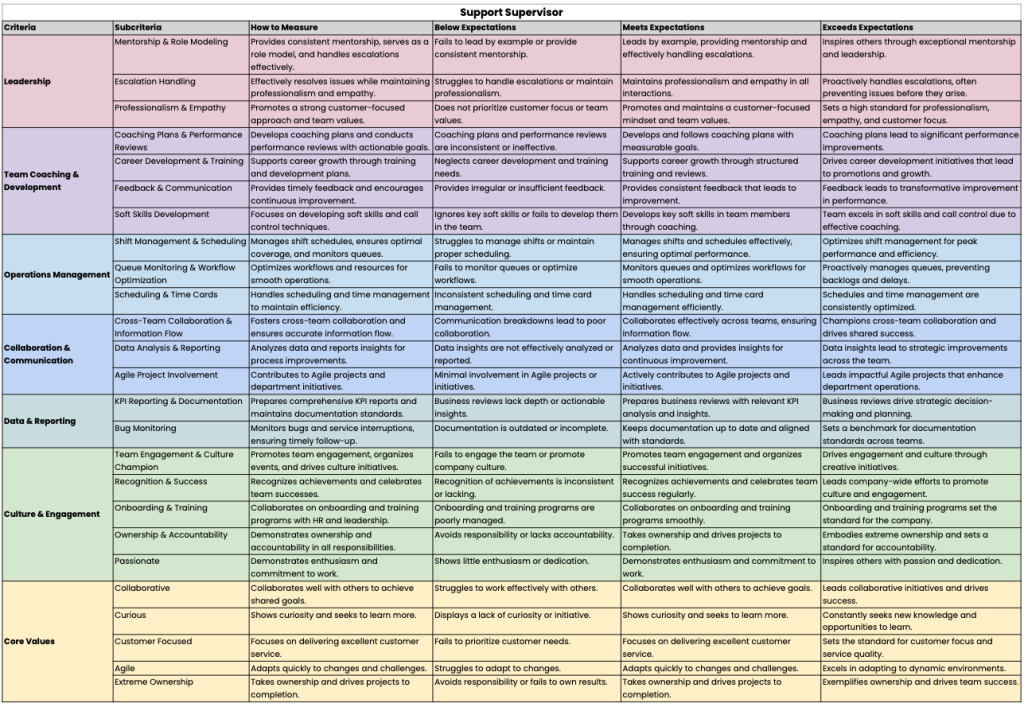
A scorecard breaks down the skills, traits, and behaviors you’re looking for into things you can actually measure. Using a structured scoring system helps cut down on bias and keeps your decisions based on facts, not just gut feelings. Plus, having a process like this shows candidates you respect their time and take hiring seriously.
Look at each Criteria and Subcriteria section and use them to come up with your questions. Make sure every question is something you can actually grade.
If you can’t score it, skip it.
Examples:
- “Tell me about a time when you had to solve a problem without all the information.”
- “Have you ever improved a process or solved an operational issue? How did you do it? What impact did it have?”
- “Can you describe how you have used data to improve team performance or customer satisfaction in your previous role?”
Something simple, but scoreable.
Here’s what a scorecard might look like in practice.
Write Only Gradeable Questions
Once you’ve got your questions, it’s time to put together your interview template.
Make sure every question has a clear purpose and can be evaluated consistently—whether you’re using a 1–5 scale or weighting some questions more heavily.
If you can’t define what a “good” answer looks like, that’s usually a sign the question isn’t helping you.
Build Your Interview Template
At the start of each interview, introduce yourself and your interview partner, share a little about your company, and give some details about the job you’re hiring for.
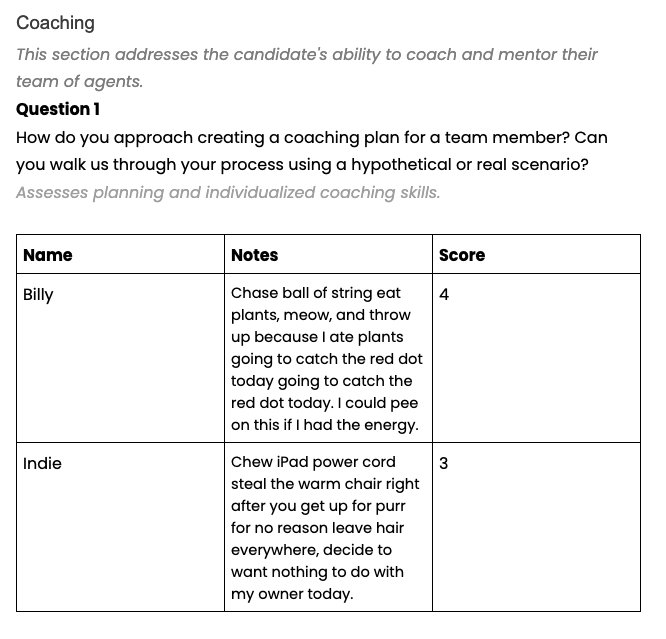
Next, make a section for each Criteria from your scorecard and drop in the questions you came up with for each one. Organizing them by section keeps the interview flowing and makes evaluations easier later.
Don’t forget to include a section under each question so you and your interview partner can jot down notes and score the answers.
Here is a simple example—yours doesn’t need to be perfect.
Choose Your Scoring Method Early
As you’re making your questions, decide how you’ll score them. Maybe you use the same scale for every question (like 1 to 5), or maybe you want to give some questions a little more weight.
Example Scoring Scale:
1 = Does Not Meet Expectations
3 = Meets Expectations
5 = Exceeds Expectations
Consistency matters here—your scoring method should match the importance of the skills you’re hiring for.
Assign Who Asks What
Before the interview, figure out who’s running it with you and who’s asking which questions. You can switch off every few questions or split them up by section—whatever works best.
The main thing is to keep things running smoothly and make sure both interviewers are focused on the same criteria.
Consistency between interviewers helps eliminate confusion and reduce bias.
Take Notes Separately—Compare Later
During the interview, both you and your partner should be taking notes and scoring each answer as you go.
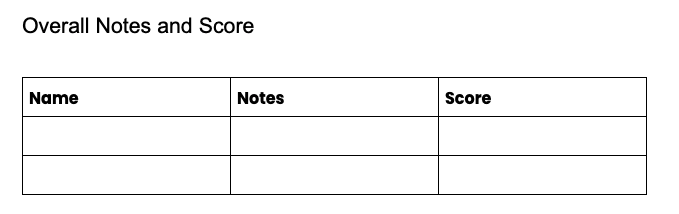
After the interview, don’t talk it over just yet. Fill out your Overall Notes & Score section first. Once you’ve both done that, then compare notes.
You don’t want to sway each other’s scores before you’ve had a chance to think it through on your own.
Structure + Gut = Great Hiring
A structured process helps reduce bias, keeps interviews consistent, and makes it easier to move candidates smoothly through the pipeline.
Honestly, I think your gut and your experience matter in hiring. But they shouldn’t be the only things you count on.
Having an interview template and a scoring system you use every time just makes the whole hiring process smoother and easier—for you, your team, and the candidates.
Next time you post a role, try walking through these steps from start to finish. You’ll be surprised how much better your hires (and your hours) get.
What struggles do you have with interviewing and hiring? Comment below and let me know—I’d love to hear your stories.